Why Peer Comps Break
Peer benchmarking breaks on the basis, not the arithmetic: where a peer comparison quietly fails, and why most decks never disclose it.
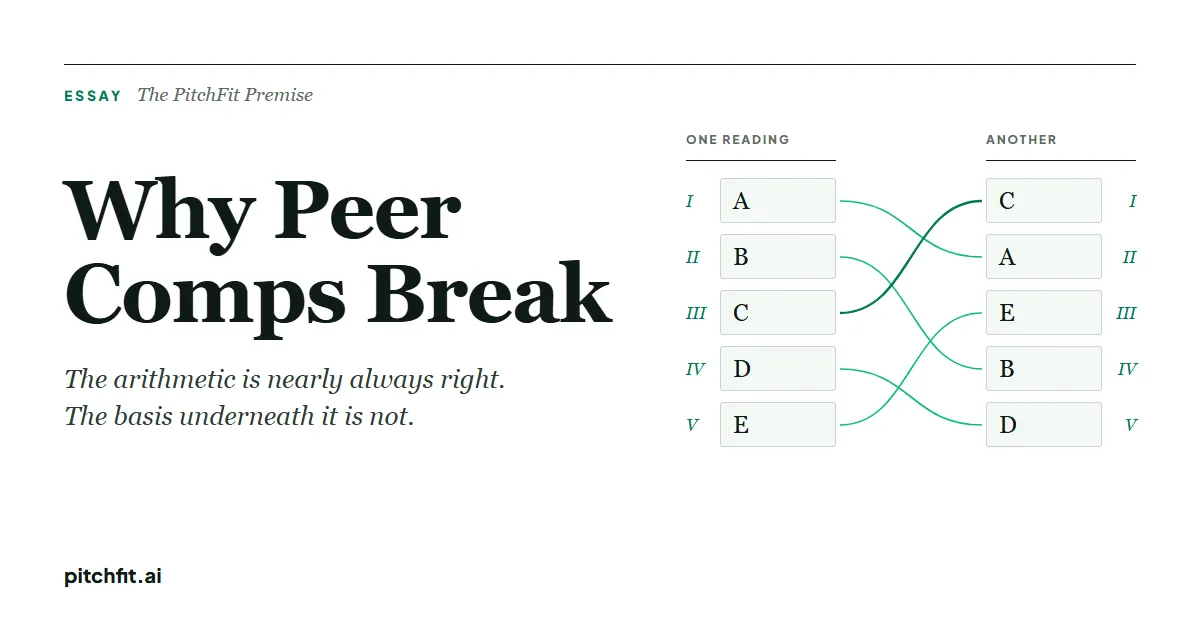
A peer comp is the most trusted slide in finance, and the most quietly broken. Put five companies side by side, rank them on a multiple or a margin, and the ranking feels like arithmetic - objective, checkable, done. Most of the time the arithmetic is fine. The basis underneath it is not.
- Peer comp
- Short for comparable company analysis: companies in the same line of business set side by side on the same multiples and margins, so each can be judged against the others.
Every figure on that slide has already passed through a dozen silent decisions about what each line means. Change a few of them and the ranking reshuffles - not because anyone miscalculated, but because the companies were never being read the same way.
The arithmetic is the easy part
Dividing one number by another is rarely where comps go wrong. The division is trivial and the formula is auditable. What is not auditable, from the outside, is the numerator and denominator: what counts as debt, what counts as operating, what was treated as one-off, which period the figure even belongs to. Get those right and a simple ratio is sound. Get them inconsistent across names and the cleanest formula produces a confident, wrong ranking.
Where do peer comparisons break?
The fractures are always in the same places. The same line item is classified differently from one company to the next - leases capitalised here and expensed there, an item above the operating line in one filing and below it in another. One-offs are stripped out by one analyst and left in by another. And calendarisation - aligning mismatched fiscal years - silently shifts which twelve months you are even comparing.
None of these is an error. Each is a defensible reading. But a comp assumes every company on the page was read on one basis, and almost none disclose whether that is true.
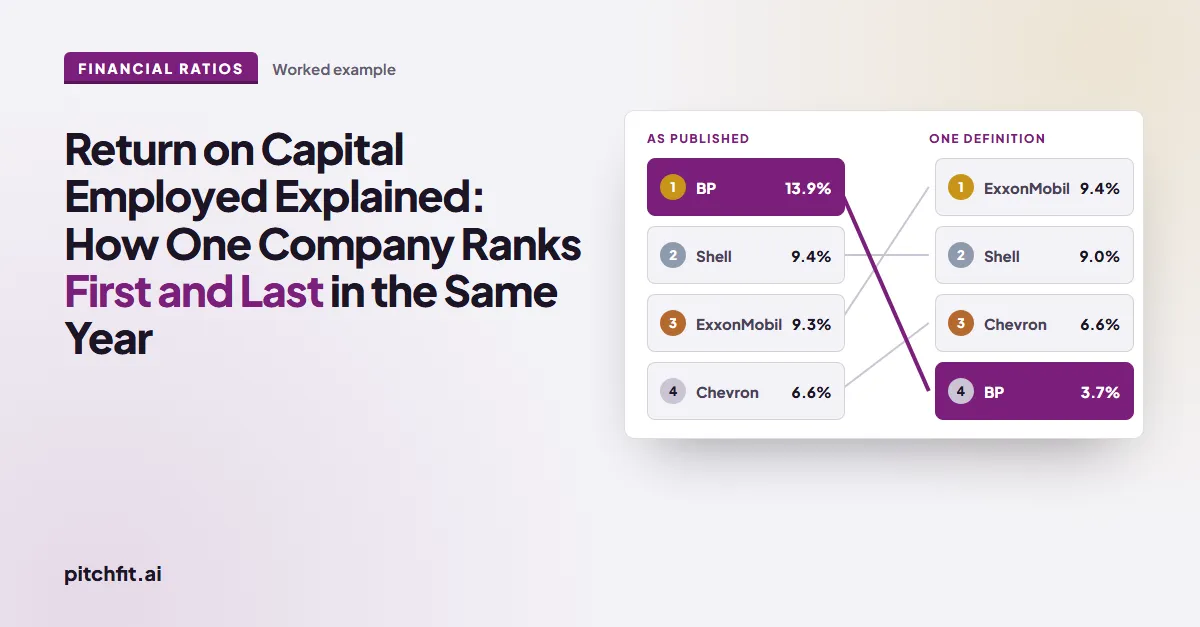
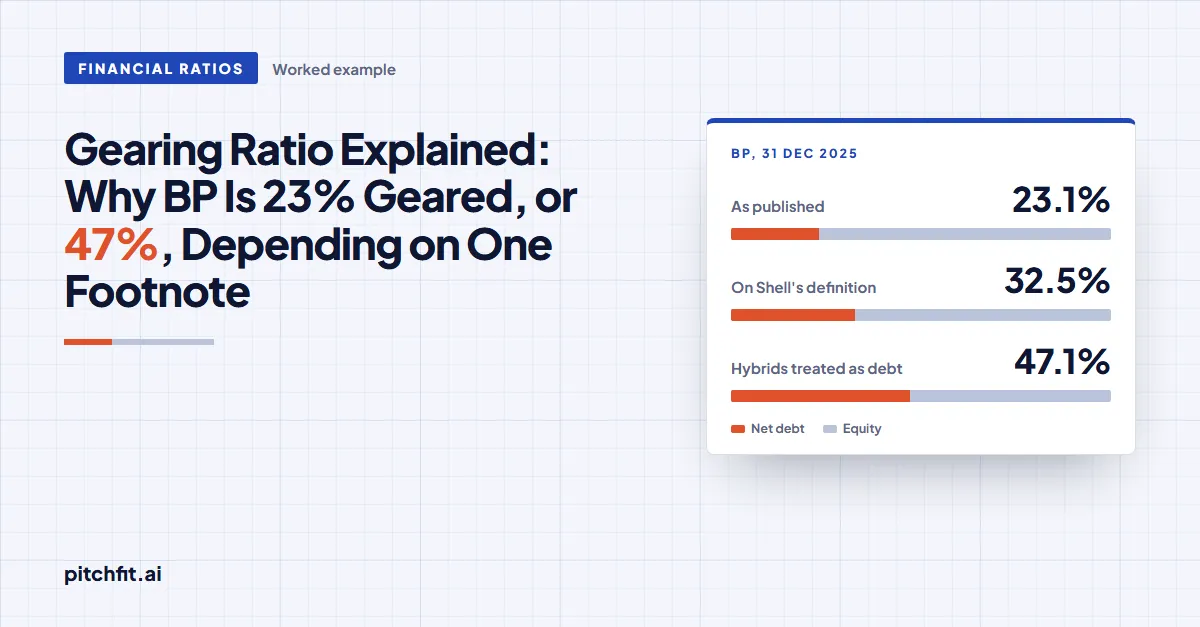
Apple's FY2024 10-K, one ratio, net debt to EBITDA: 0.57x on cash alone, 0.31x with current marketable securities, negative 0.37x with all marketable securities. Nothing was miscalculated. Only the definition of cash changed.
Financial leverage ratio: four formulas, one company, four answers”A comp doesn't break on a wrong formula. It breaks on an undisclosed change of basis.
Why the deck never shows it
Because the normalization happened privately, in someone's model, before the slide existed. The assumptions don't travel with the numbers, so the reader sees a tidy ranking and no trace of the choices that produced it. When two desks disagree, they argue about the conclusion - never the basis, because neither basis was ever written down.
How can peer benchmarking be made reliable?
The fix is not a better formula; it is a shared basis. Standardize every company onto one consistent set of definitions, make each mapping visible, and let every figure trace back to the filing it came from. Then a comp is sound the moment you build it - not after a week of reconciling everyone's private adjustments. That is what PitchFit is for: every statement standardized one way, every number traced to source.
Frequently asked questions
What is a peer comp?
A comparable company analysis: companies put side by side and ranked on a multiple or a margin. It is the most trusted slide in finance, and the most quietly broken.
Why do peer comps break?
Not on a wrong formula. On an undisclosed change of basis: the same line item classified differently from one company to the next, one-offs stripped out by one analyst and left in by another, fiscal years aligned differently.
What is calendarisation?
Aligning mismatched fiscal years, so that every company in a comp is read over the same twelve months.
Is a different classification an error?
No. Each is a defensible reading. But a comp assumes every company on the page was read on one basis, and almost none disclose whether that is true.
Why do two desks disagree on the same comp?
Because the normalization happened privately, in someone's model, before the slide existed. They argue about the conclusion, never the basis, because neither basis was ever written down.
Notes from the team building PitchFit - one defensible basis for every statement, every figure traced to its source.
 Restructuring
 Insights
 Financial ratios
 Financial ratios
 IFRS 18 WatchRestructuringInsightsFinancial ratiosFinancial ratiosIFRS 18 Watch